
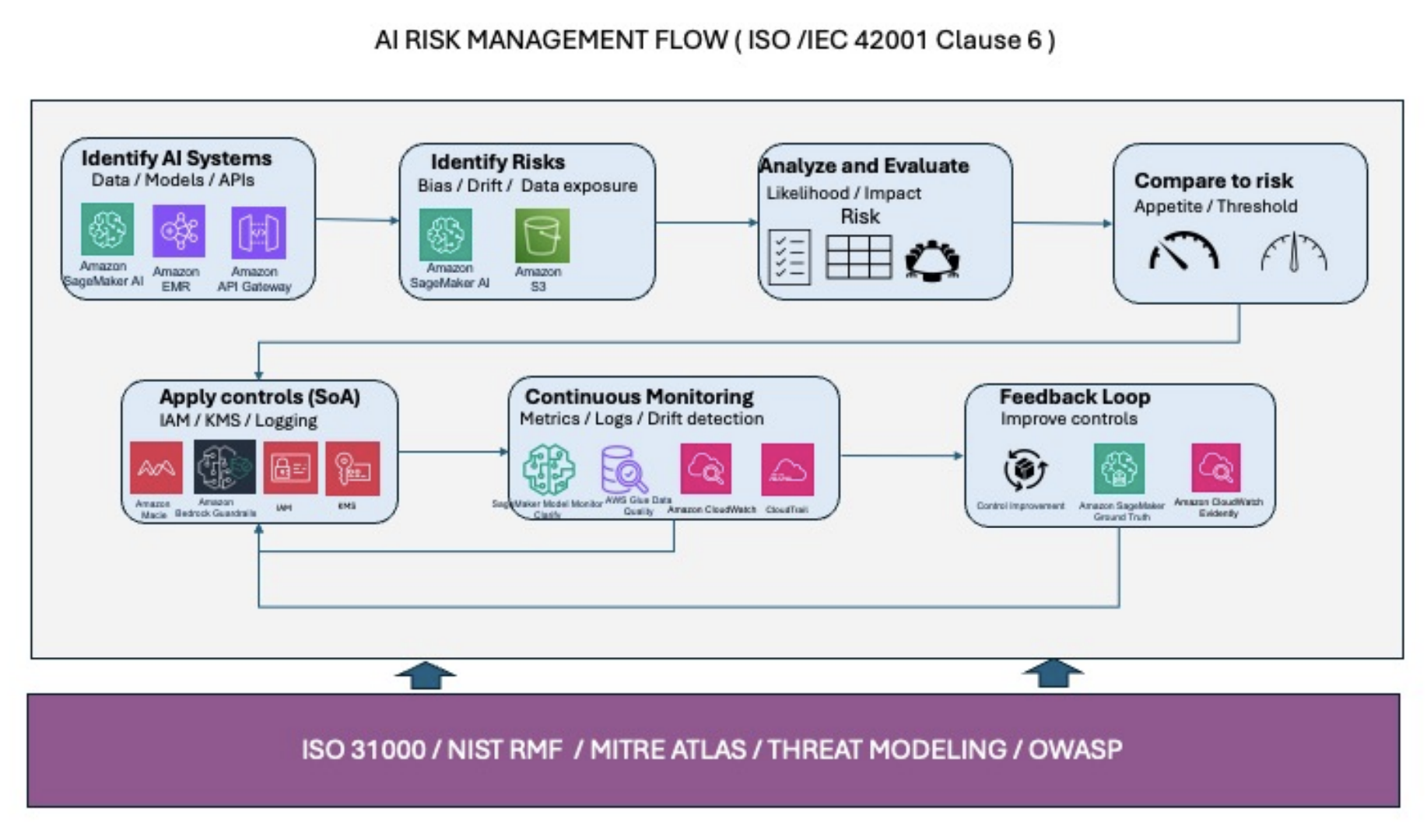
Artificial Intelligence (AI), Generative AI, and Agentic AI do not fit within historical IT in enterprise governance and compliance strategy. In present-day operational reality, there is an urgent need for governance frameworks that organizations can implement to address the risks posed by these technologies. To meet these challenges, AWS has released its AI compliance guide, “Implementing ISO/IEC 42001:2023 AI Management Systems (AIMS) on AWS” (PDF).
The May 2016 guide gives cloud teams a structured, practical resource for building an Artificial Intelligence Management System (AIMS) on AWS. This isn’t just a document for legal and compliance departments, but rather a hands-on reference that architects, security engineers, and AI developers can use to align their workloads with globally recognized standards. It specifically outlines what services to use and how to use them to meet compliance. As generative and agentic AI adoption accelerates, understanding this framework is now a core professional competency. For certification candidates and practitioners alike, this guide marks a meaningful milestone in AWS’s formalization of AI guidance in the cloud.
A Shared Responsibility
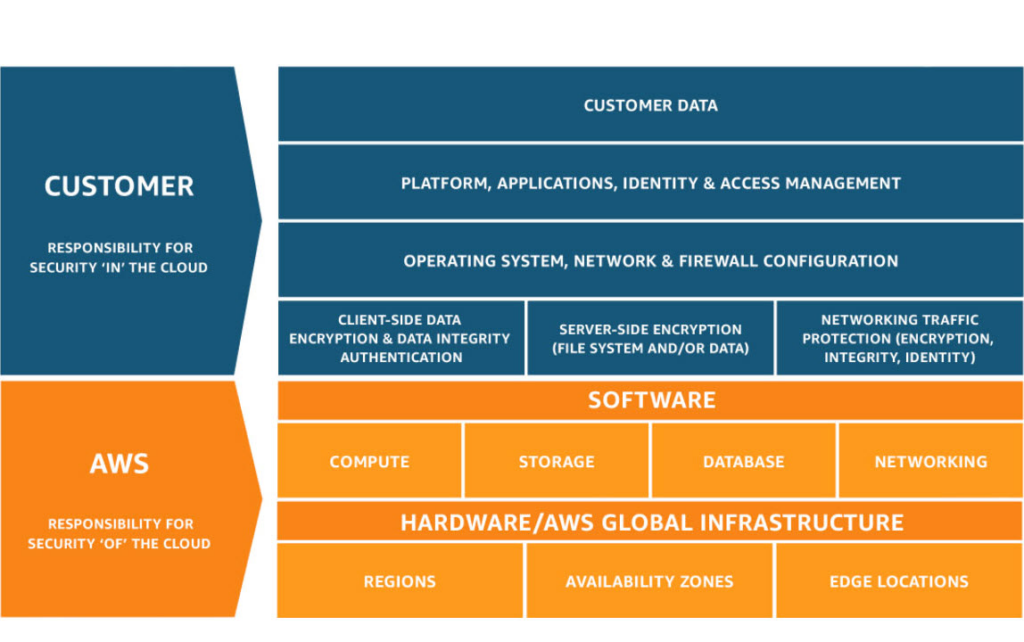
Remember that when running your AI workloads in the cloud, you adhere to the shared responsibility model. AWS states:
AI Security and AI Compliance are a shared responsibility between AWS and the customer. This shared model can help relieve the customer’s operational burden as AWS operates, manages and controls the components from the host operating system and virtualization layer down to the physical security of the facilities in which the service operates. The customer assumes responsibility and management of the guest operating system (including updates and security patches), other associated application software as well as the configuration of the AWS provided security group firewall. Customers should carefully consider the services they choose as their responsibilities vary depending on the services used, the integration of those services into their IT environment, and applicable laws and regulations. The nature of this shared responsibility also provides the flexibility and customer control that permits the deployment. As shown in the chart below, this differentiation of responsibility is commonly referred to as Security “of” the Cloud versus Security “in” the Cloud.
What Is ISO/IEC 42001:2023?
ISO/IEC 42001:2023 is the first international standard specifically designed for AI management systems, published by the International Organization for Standardization. It establishes requirements for organizations to responsibly develop, deploy, and manage AI. It covers everything from risk assessment and transparency to human oversight and continual improvement. Think of it as the AI equivalent of ISO 27001 for information security — a structured management system approach rather than a checklist. For organizations operating in regulated industries such as finance, healthcare, or government, aligning with this standard is rapidly becoming a contractual and regulatory expectation.
What the AWS AI Compliance Guide Actually Covers
The AWS ISO/IEC 42001:2023 guide provides service-level mappings showing how AWS tools and services support specific clauses in the standard. It covers areas including AI risk management, data governance, model transparency, security controls, and organizational accountability structures. Key AWS services referenced in this context include Amazon Bedrock, Amazon SageMaker, AWS CloudTrail, AWS Config, and AWS Security Hub, services that certification candidates will recognize from multiple exam domains. The guide also offers implementation guidance for teams to assess their current state and identify gaps before pursuing formal certification or audit readiness. For cloud professionals, this is the bridge between theoretical AI governance and tangible AWS architecture decisions.
AWS Training and Certification Domains and Exams
🎓 This guide is relevant across several AWS certification tracks, and candidates should treat it as supplemental reading material:
The AWS Certified AI Practitioner exam covers responsible AI, governance, and the operational aspects of AI workloads. This guide maps almost perfectly to those objectives. The AWS Certified Security Specialty exam tests deep knowledge of compliance frameworks, audit readiness, and how AWS services support regulatory requirements, all of which appear in this guide. The AWS Certified Solutions Architect – Professional exam challenges candidates on governance at scale, multi-account compliance strategies, and the design of systems for risk. Even candidates pursuing the AWS Certified Machine Learning Engineer Associate will benefit from understanding how governance wraps around the ML lifecycle. Familiarity with standards like ISO/IEC 42001 increasingly differentiates senior-level candidates from those with only technical depth.
Building a Compliant Generative AI Platform
Picture a healthcare technology company that has just deployed a generative AI assistant using Amazon Bedrock to help clinical staff summarize patient records. The product is technically functional, but the CISO raises a red flag: “We have no documented AI risk management process, no model transparency controls, and nothing showing human oversight is built in.” Enter the ISO/IEC 42001:2023 on AWS guide. The Solutions Architect and Security Engineer use it to map their Bedrock implementation to standard clauses — enabling AWS CloudTrail for model invocation logging, using AWS Config rules to enforce guardrails, and documenting human review workflows as part of the AIMS. Within weeks, the team will have a defensible governance posture they can present to regulators, auditors, and executive leadership. This is exactly the kind of scenario that appears in professional-level exam case studies — and exactly the kind of work enterprises need practitioners who can execute.
Why Cloud Professionals Should Add AI Governance to Their Skill Set Now
The integration of AI into cloud architecture is no longer optional for most enterprises, and neither is the governance layer that surrounds it. Compliance frameworks like ISO/IEC 42001 are moving from “nice to have” to “required before deployment” in many organizations, particularly those operating across international jurisdictions. Cloud professionals who can speak the language of AI risk management and translate it into AWS service configurations will hold a significant advantage in job roles ranging from Solutions Architects to AI/ML Engineers to Cloud Security Consultants. AWS publishing this guide is a strong signal that AI governance knowledge will increasingly appear in updated exam blueprints and job descriptions. Now is the time to get ahead of that curve, not catch up to it.
Closing: Turn Compliance Knowledge Into Career Currency
Understanding frameworks like ISO/IEC 42001 and how AWS operationalizes them is exactly the kind of depth that separates good cloud and AI practitioners from exceptional ones. At Tech Reformers, we bring real-world context to the official AWS curriculum — helping you connect compliance concepts like these to hands-on labs, real architecture scenarios, and the exam domains that matter most. Whether you’re preparing for your next AWS certification or leveling up your enterprise cloud skills, we’re here to help you build knowledge that transfers directly to the job.
👉 Explore our upcoming training programs at https://techreformers.com — and follow us so you never miss an announcement that could impact your certification journey or your career.

